










Source:LZY Release Time:2026-08-14
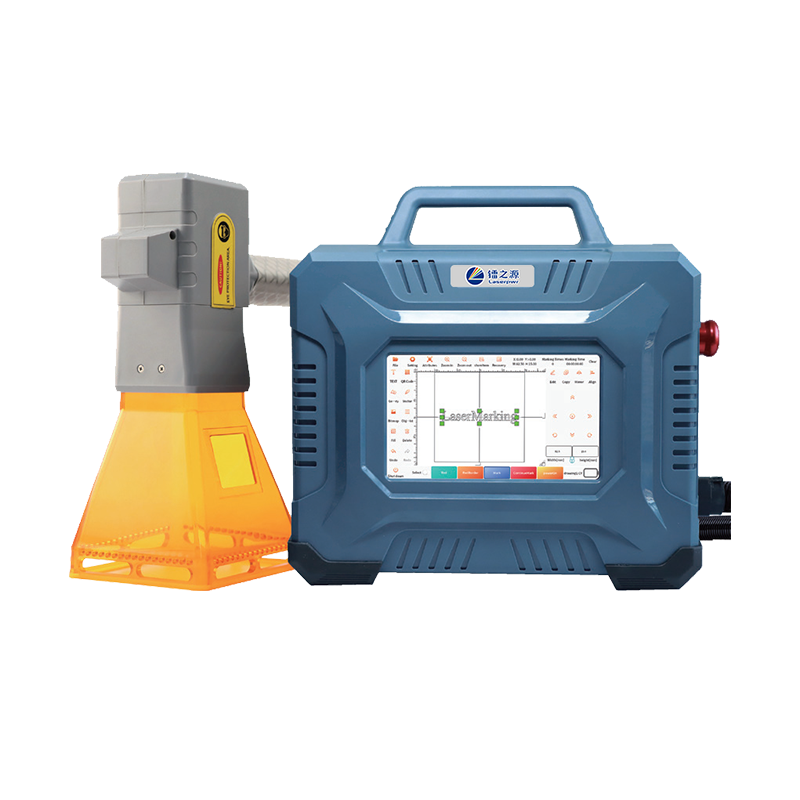
In recent years, portable handheld laser marking machines have gained wide adoption across heavy‑duty machinery, tire manufacturing, power transmission pole, and hardware production industries. However, the market shows huge price gaps, with numerous products suffering from exaggerated parameter specs, inadequate safety protection, and rudimentary software functions.
Many buyers only focus on power rating and price during procurement, ignoring operating systems, battery performance, safety protection, and expandable functions. Consequently, purchased units often fail to match actual production conditions. Drawing on LZY’s long‑term R&D experience in laser equipment, we have compiled seven core selection points to help enterprises pick the right handheld laser marking machine.
1. Laser Power: Match Marking Materials and Engraving Depth
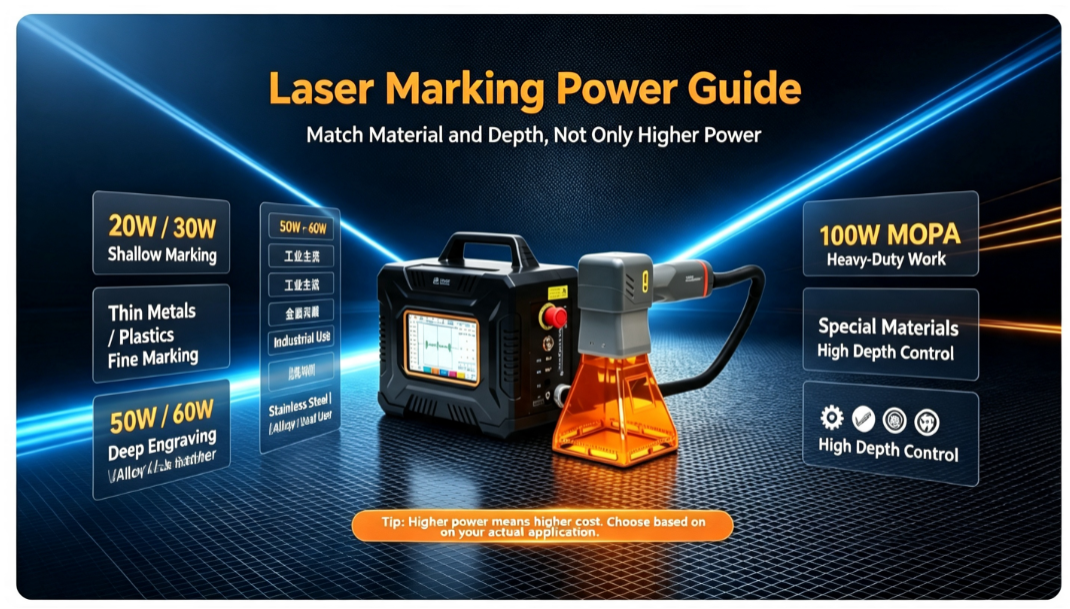
Common power ratings available on the market include 20W, 30W, 50W, 60W and 100W MOPA versions.
20‑30W: For shallow‑depth marking on stainless steel, plastics, leather and general‑purpose hardware.
50‑60W: Industrial mainstream option, ideal for deep metal engraving, tires, gears and heavy‑duty components with higher marking efficiency.
100W MOPA: For heavy‑duty demanding applications, special materials and high‑difficulty deep‑engraving scenarios.
Tip: Do not blindly chase high power. Higher power comes with higher costs. Select according to your actual processing materials.
2. Operating System: Prioritize Independent Linux Touch‑Screen Systems, Avoid PC‑Dependent Units
Many low‑cost handheld marking machines must be controlled via external computer software, which imposes heavy restrictions for on‑site operations. Give priority to models equipped with a built‑in 7‑inch touch screen and independent Linux OS. These machines can complete file editing, parameter adjustment, barcode & QR‑code generation locally, without carrying a computer for field or outdoor work.
Meanwhile, confirm whether the software supports secondary development. Compatibility with factory MES system integration and data reading via scanning guns is critical for smart manufacturing traceability projects.
3. Battery Solution: Confirm Support for Swappable Batteries and Charging‑While‑Operating
Batteries are critical for outdoor and mobile workshop operations. Three key points to verify: lithium‑ion battery capacity, support for quick battery replacement, and charging‑while‑marking capability. Some low‑cost devices feature non‑replaceable batteries and must stop working once power runs out, severely disrupting continuous production.
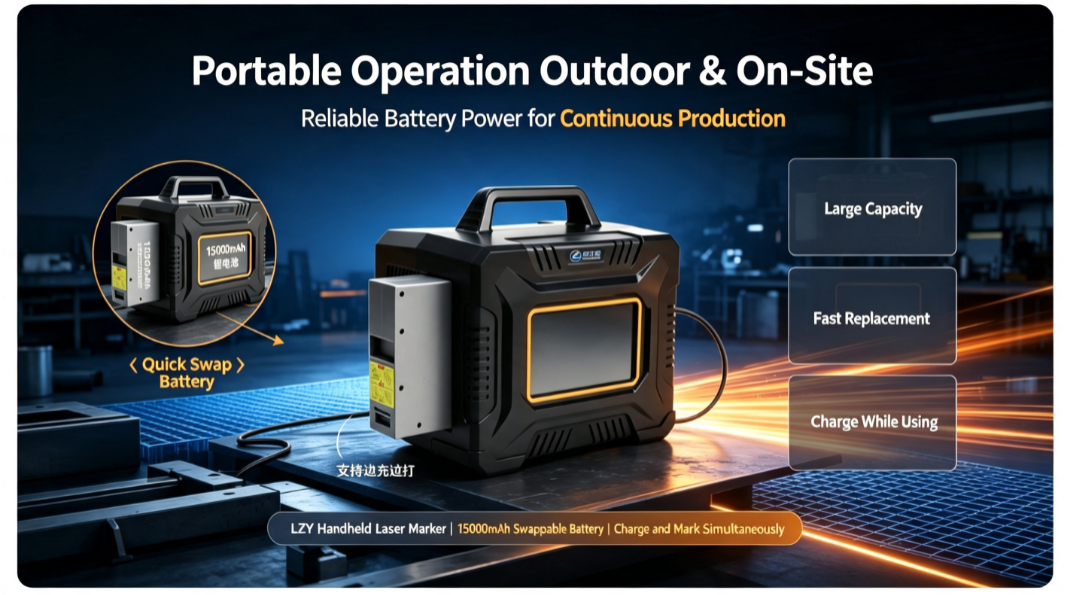
LZY handheld laser marking machines are fitted with swappable 15000 mAh lithium‑ion batteries and support charging during operation, eliminating downtime risks caused by power loss.
4. Interchangeable Field Lenses for Different Marking Areas
Common field lens specifications:
50×50 mm (fine small‑size parts), 100×100 mm (market standard), 150×150 mm (large‑size workpieces).
Prioritize models with freely interchangeable field lenses. One single machine can adapt to diverse workpieces, removing the need to purchase new hardware for future working‑condition expansions.
5. Marking‑Head Safety Protection: Never Overlook Laser Safety Class
Handheld units are Class 4 laser devices. Improper operation may cause eye and skin injuries. Always verify whether the marking gun features a fully‑enclosed laser protective hood with CE safety certification, built‑in exhaust cooling fan and viewing window. Low‑grade products lack such protective structures and carry major workplace hazards.
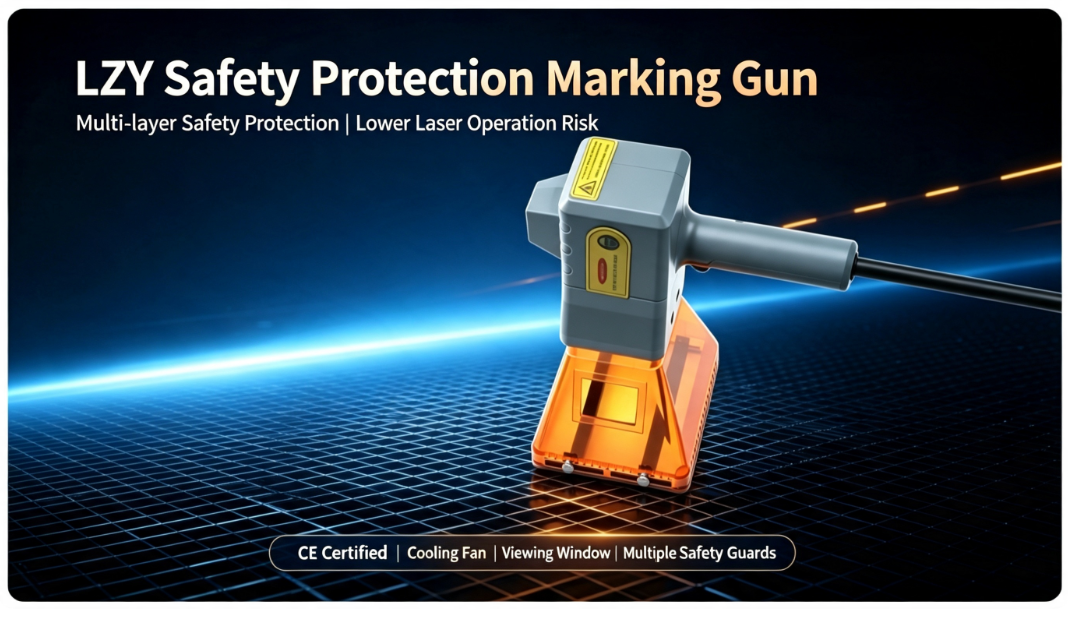
The equipment shall also be equipped with complete safety warning labels and emergency‑stop buttons for multi‑layer safety safeguards.
6. File Compatibility: Check Support for Industrial‑Standard File Formats
In real‑world production, users import images, vector graphics, barcodes and QR‑codes. Confirm the machine supports JPG, PNG, BMP, SVG, PLT, DXF, TXT and Excel files, as well as 1D barcodes, QR‑codes and variable serial numbers to satisfy factory traceability marking workflows.
7. Manufacturer After‑Sales Service & Qualifications
Prefer original manufacturers holding ISO 9001 certification. Verify complete user manuals, troubleshooting documentation, full‑machine warranty policies, technical support and return‑to‑factory repair services. Assembled or OEM products often suffer from hard‑to‑source spare parts and unresponsive fault handling.
Why More Enterprises Choose LZY?
The seven criteria listed above represent the core dimensions LZY iterates during every generation of handheld laser marking machine R&D.
As an ISO 9001‑certified original equipment manufacturer, LZY equips all handheld models with native Linux touch‑screen systems, high‑capacity swappable batteries, freely‑switchable field‑lens modules, fully‑enclosed laser hoods and CE‑compliant safety designs. Our equipment is purpose‑built for real‑world factory workflows instead of simple OEM assembly. It supports MES system integration, variable‑data databases and plug‑and‑play scanning‑gun connectivity for smart manufacturing traceability.
LZY delivers full‑lifecycle service support ranging from user manuals and troubleshooting guides to full‑machine warranty and fast technical response. If you are sourcing a reliable, durable, PC‑free and safety‑compliant handheld laser marking machine for your production line, LZY deserves your shortlist. Match your equipment to your real‑world working conditions, rather than adapting your production to equipment limitations.
LZY Laser provides free sample marking. We can offer complete selection recommendations based on your workpiece materials.
Submit this form and we will contact you soon