








Source:LZY Release Time:2026-07-24
In the automotive supply chain, tires are the only core safety components that maintain direct contact with the road. The specification codes, production batch numbers, DOT certifications, and QR codes printed on tire sidewalls serve not only as product "identity cards" but also as critical references for quality traceability, after-sales service, and brand anti-counterfeiting. However, traditional inkjet coding is prone to wear and fading, while mechanical embossing suffers from low efficiency and potential carcass damage—making both increasingly inadequate for the modern tire industry's demands for full lifecycle management and green intelligent manufacturing.
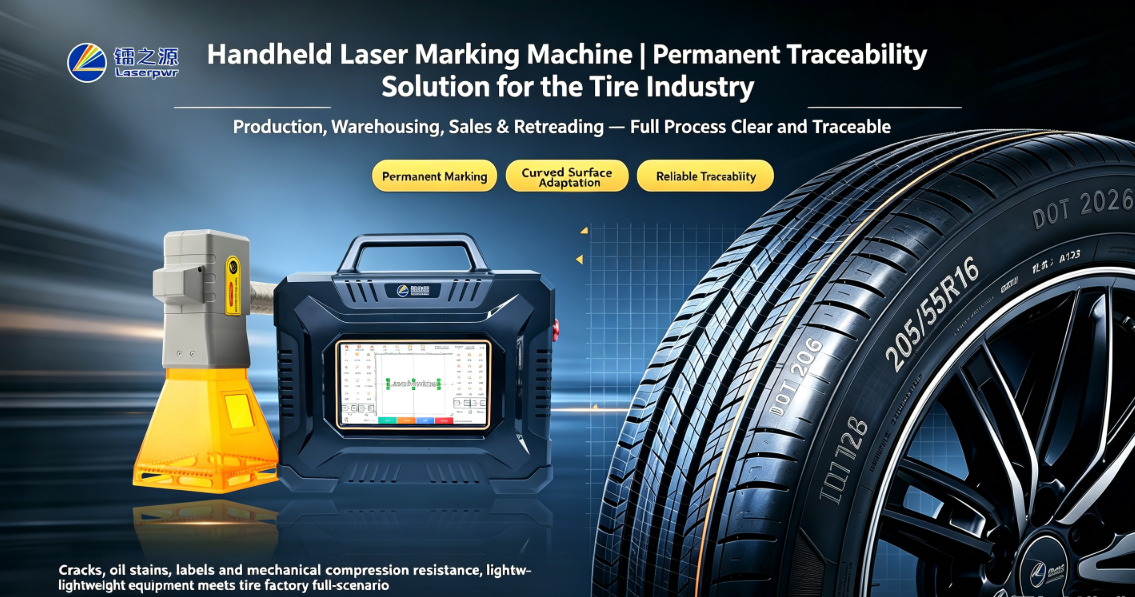
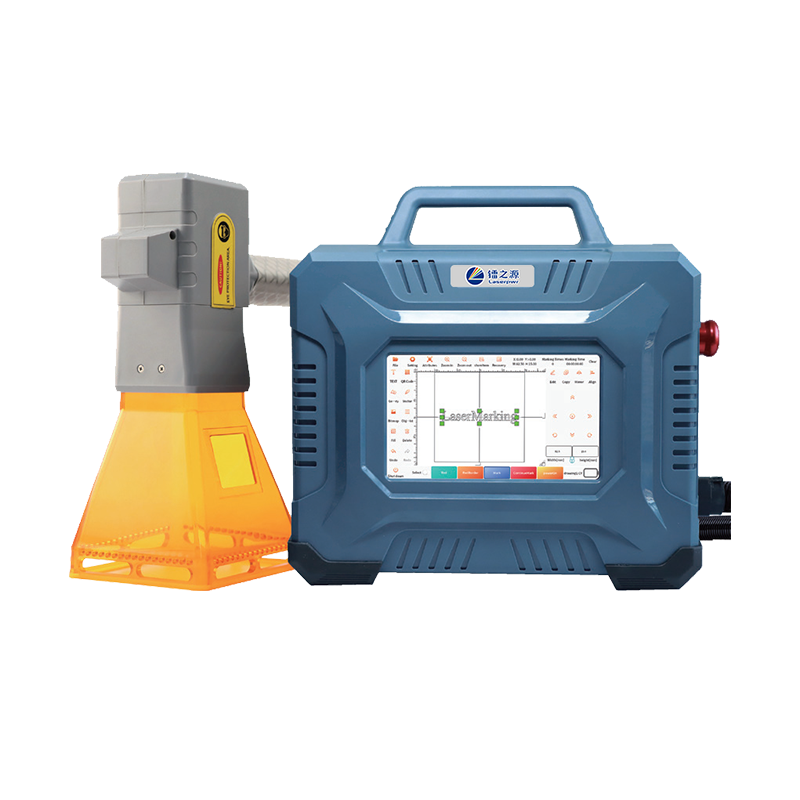
Against this backdrop, the LZY Tire-Specific Handheld Laser Marking Machine stands out with its remarkable advantages of permanent marking, flexible operation, and intelligent connectivity, and is emerging as a revolutionary tool for tire production lines and aftermarket service networks.
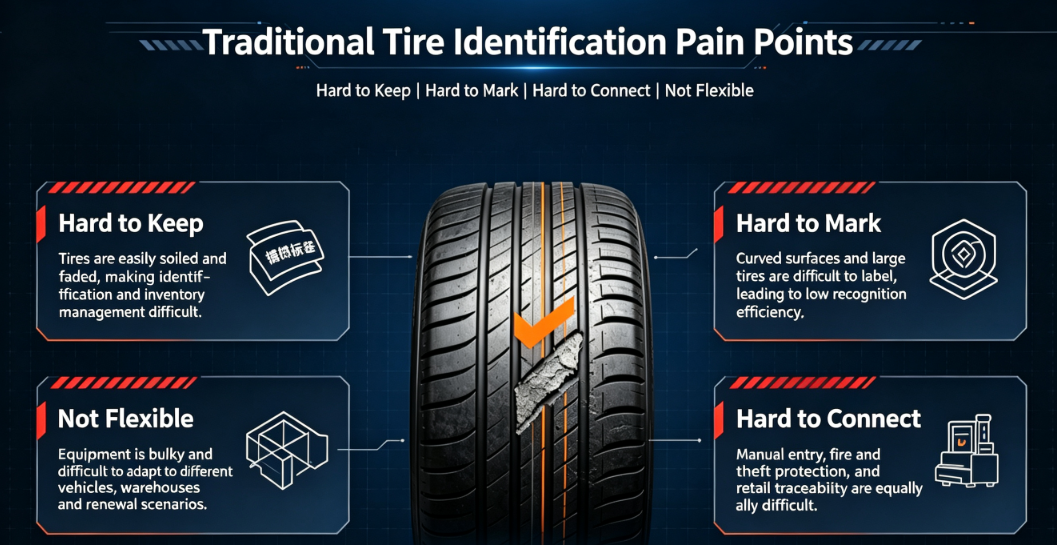
I. Breaking Through Traditional Bottlenecks: From "Consumable Code" to "Permanent Mark"
Tires operate in extremely harsh environments, constantly exposed to abrasive grit, water wash, UV radiation, and extreme temperature fluctuations. Traditional ink-based codes often become illegible after just a few months of use, complicating after-sales traceability and territory management. Meanwhile, mold-embossed markings require cumbersome mold changes, offer limited design flexibility, and can affect tire aesthetics due to flash formation.
The LZY Tire-Specific Handheld Laser Marking Machine employs a 1064nm fiber laser that directs a high-energy-density beam directly onto the rubber surface. The instant vaporization or carbonization creates a controlled-depth, permanent groove marking. This mark exhibits exceptional resistance to abrasion and aging, ensuring that the code remains crisp and readable throughout the tire's entire service life—typically spanning tens of thousands of kilometers. In effect, each tire receives an inalterable "lifetime ID."
II. Empowering Real-World Scenarios: Flexible Adaptation to Complex Conditions
Compared to bulky fixed laser systems, the handheld design brings a true operational revolution:
All-Scenario Adaptability: The device supports both plug-in power and swappable lithium battery operation, completely eliminating cable constraints. Whether for end-of-line rework, random inspections of stacked tires in warehouses, or on-site marking of oversized off-the-road (OTR) and giant radial tires that are difficult to move, operators can mark "on demand, wherever the tire is."
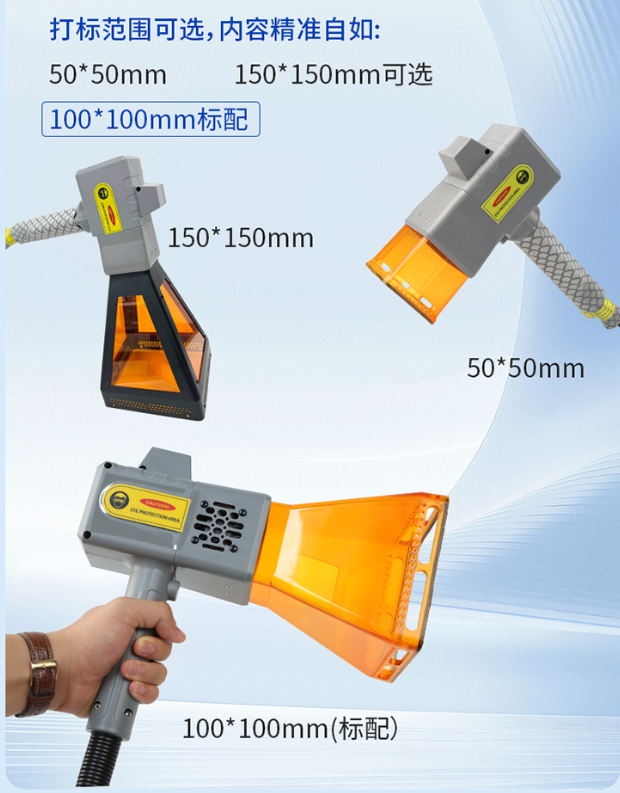
High Precision with Large-Format Compatibility: To accommodate the curved profile of tire surfaces, the system uses red-light aiming for accurate focus adjustment. With a standard 100×100 mm marking field (optional 50×150 mm or 150×150 mm available) and a tunable frequency range of 45–170 kHz, it can sharply engrave brand logos, alphanumeric text, serial numbers, and high-density 2D codes—ensuring reliable readability that complies with stringent international certifications such as DOT and ECE.
Efficiency and Intelligence: For example, marking a standard PCR (passenger car radial) tire takes approximately 10 seconds. The machine runs on a self-developed Linux operating system with a 7‑inch HD capacitive touchscreen that offers a smartphone-like user experience, supporting freehand drawing and the combination of multiple graphic elements with ease.
III. Deep Integration into Smart Manufacturing: Connectivity and Green Operations
In the Industry 4.0 era, marking devices serve not only as tools but also as critical data-collection nodes. The machine comes with built-in SDK support for secondary development, enabling seamless connectivity with factory MES and ERP systems. This allows for real-time data exchange and dynamic marking, building a complete traceability chain from mixing and tire building to finished-goods dispatch.
Moreover, laser marking is a non-contact process that requires no inks, solvents, or other consumables and produces zero VOCs emissions. It not only complies with EU CE safety standards and China's "dual carbon" environmental goals but also significantly reduces overall operating costs by eliminating recurring consumable expenses.
From fixed stations adjacent to tire curing presses to service points worldwide, the LZY Tire-Specific Portable Handheld Laser Marking Machine is redefining the standard for tire identification with its permanent, precise, and intelligent capabilities. It resolves long-standing challenges of conventional methods while empowering the tire industry's shift toward flexible, sustainable manufacturing through its highly integrated, compact form factor and robust data-interconnectivity features.
Submit this form and we will contact you soon