











Source:LZY Release Time:2026-04-08
As of 2026, the electric pole marking industry is rapidly upgrading from traditional paint spraying to permanent, digital systems using laser marking and intelligent identification tags. This transformation is driven by stricter standards and accelerated technological iteration. Why? Behind this change are multiple drivers: policy requirements, market demand, and industry pain points.
I. Policy and Standards Drivers
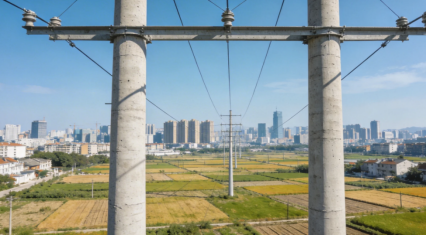
Driven by national policies and standards, State Grid's specifications for equipment identification clearly require each pole to be equipped with equipment markings such as pole number, voltage level, and phase sequence, as well as safety markings like "Danger: High Voltage". The minimum required service life for these markings is 10-15 years. Furthermore, concrete poles are required to have permanent markings including the manufacturer, year of manufacture, and crack inspection bending moment.
II. Market Demand Scale for Electric Poles
According to industry statistics, the number of new and replaced concrete poles in the national power and communication sectors is approximately 5 million units annually. Combined with demand from re-marking existing poles, rural grid upgrades, and supporting lines for new energy grid connections, the electric pole market continues to expand, creating broad application space for permanent, traceable marking equipment.
In recent years, State Grid and China Southern Power Grid have been vigorously promoting physical asset ID management for power grid assets, requiring unified identification codes for electric poles to achieve full lifecycle traceability from production and installation to operation and maintenance. This means the market for re-marking electric poles represents a huge growth opportunity.
III. Current Status and Industry Pain Points of Electric Pole Marking
In the production of electric poles, marking and traceability management have always been major challenges. Traditional methods such as inkjet printing, sticker labeling, and stamping generally suffer from non-durable markings, limited information capacity, inability to connect with systems, and traceability difficulties. In outdoor environments, markings become illegible after just six months. These methods cannot meet the needs of modern electric pole production management and quality traceability.

With the national push for physical asset ID management, requiring full lifecycle traceability for each electric pole, traditional marking methods are no longer sufficient. Simultaneously, pain points such as low manual operation efficiency, poor equipment adaptability to the production environment, and the difficulty of re-marking existing poles are becoming increasingly prominent. The electric pole industry urgently needs a portable, intelligent, permanently clear, and traceable laser marking solution.
IV. Pain Points Solved by the Handheld Laser Marking Machine
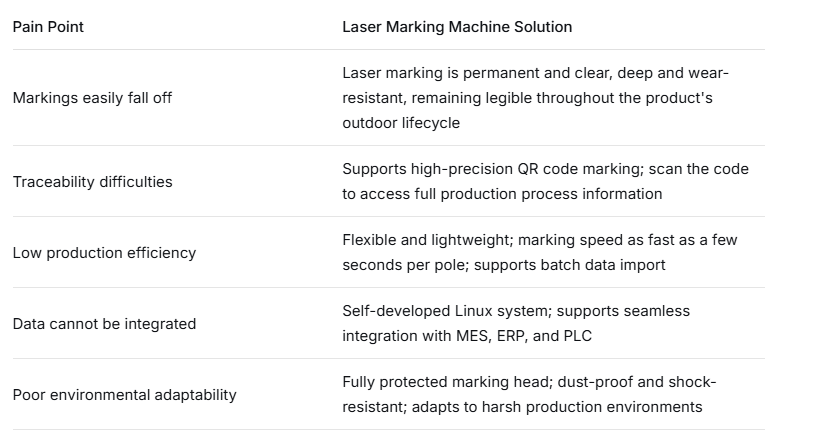
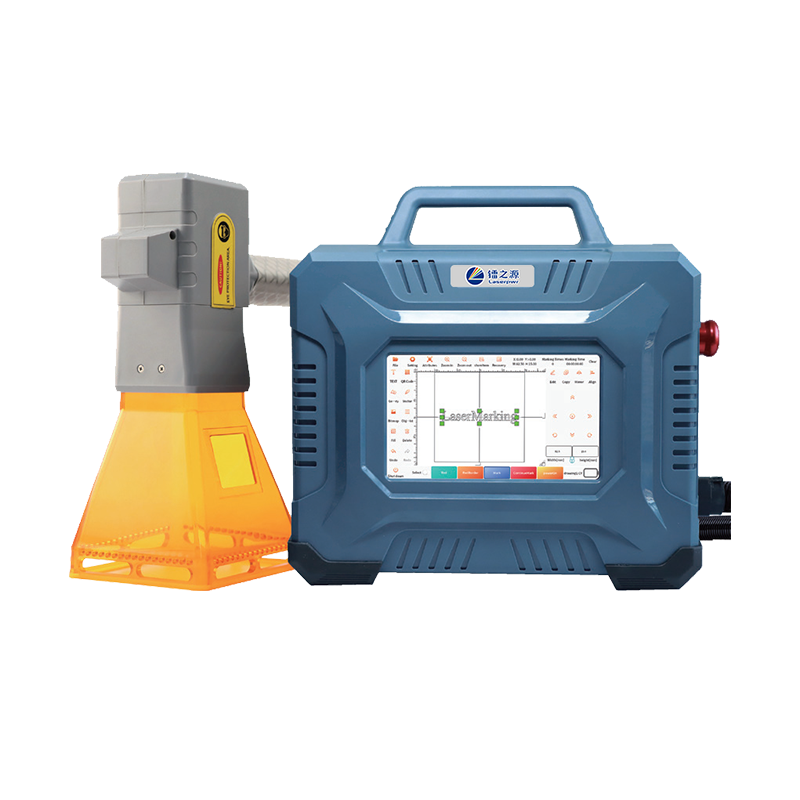
Electric poles carry the responsibility of grid safety and power supply to millions of homes. In the current era of full lifecycle traceability, permanently clear markings are no longer just an enhancement but an essential piece of infrastructure. Laser Research's handheld laser marking machine, with its core strengths of durable marking, portability, flexibility, and intelligent connectivity, helps the industry easily overcome marking challenges and enter a new era of digital management.
Submit this form and we will contact you soon