












Source:LZY Release Time:2026-04-08
On construction sites, in precast component factories, and at pipe pile production sites, there is a "small problem" that has plagued the industry for decades – yet it holds the "big key" to project quality traceability: Why can't marks on concrete components last?
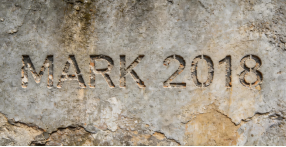
Sprayed markings fade within two or three months due to wind and sun. Stickers peel off after just one rain or even a single spray of water. Stamped markings are not only time-consuming and labor-intensive but also crooked and illegible on rough concrete surfaces.
Even more troubling – power outages are common on construction sites, large marking equipment is too heavy and impractical to use, front-line workers have limited skills and are overwhelmed by complex device interfaces, and supervisors demand full traceability, but spray-painted numbers become illegible, and QR codes cannot be scanned.
Today, we’ll break down this overlooked industry pain point, explore the root causes, and introduce the ultimate one-and-for-all solution.
01 Why Are Cement Marks Hard to Make and Hard to Read?
Cement is an extremely special medium for marking.
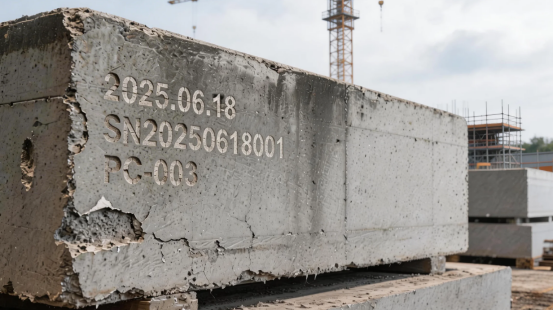
It is neither smooth and dense like metal, which readily absorbs ink, nor uniform like plastic, which bonds easily with marking materials. Cement surfaces are rough, porous, prone to weathering, and susceptible to efflorescence. Conventional marking methods are almost powerless against it:
Marking Method Problem
Spray paint/ink Only adheres to the surface with no deep bonding; peels and fades within months under sun and wind
Stickers/labels Moist environment prevents adhesion; they fall off easily
Stamping Labor-intensive, uneven depth; hard to read on rough surfaces
Nameplate fixing Easily stolen or damaged; can be knocked off during construction
The most critical pain point is that none of these methods last as long as the concrete component itself.
A pipe pile can last for decades, yet the production date, number, and batch information on it may only last a few months. By the time traceability is needed, the marks have long since disappeared.
02 Laser Marking: A "Permanent Tattoo" for Cement
To understand the principle of laser marking, think of it this way:
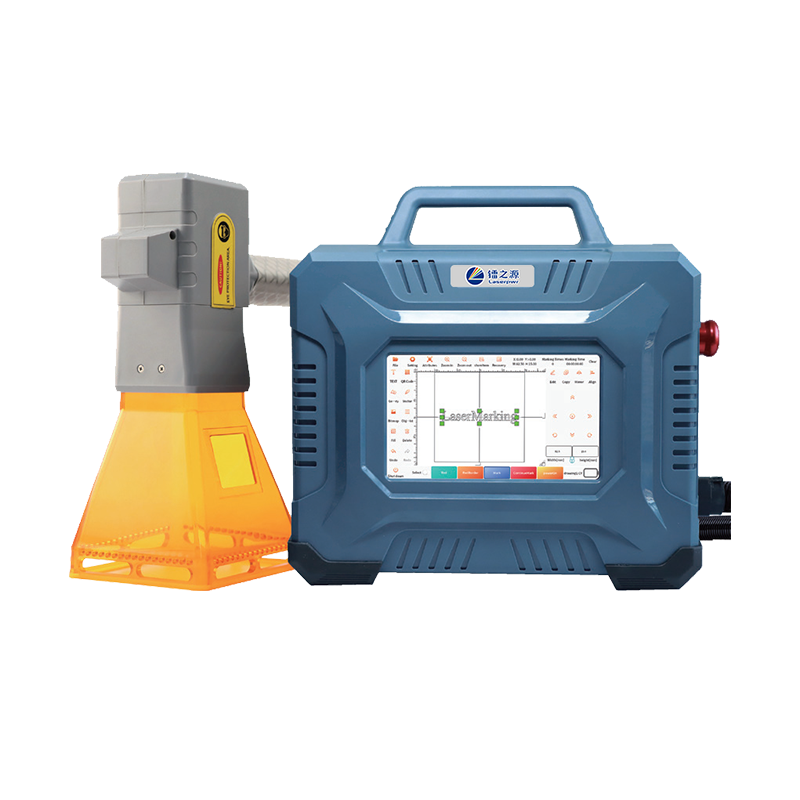
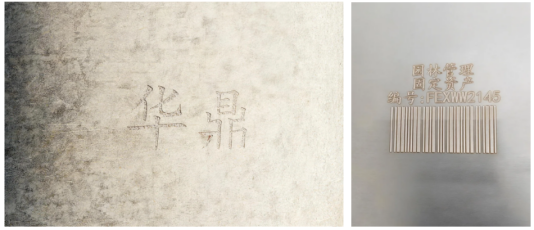
A high-energy laser beam acts on the cement surface, instantly generating high temperatures that cause physical etching or color changes, leaving a permanent mark. This mark is not "attached" to the surface – it is "grown" into the cement. It's like giving the concrete component a permanent tattoo.
☑ Wind won't fade it: The mark remains clear as ever, regardless of sun, rain, or UV exposure.
☑ Rain won't remove it: Moist environments and rain wash only make the etched marks more distinct.
☑ Scraping won't damage it: Light friction or impact will not cause the mark to fall off; it is wear-resistant and durable.
☑ As long as the component: The mark lasts as long as the concrete component itself, perfectly suited for long-term traceability.
Even better, laser marking is highly versatile – it can mark not only numbers and text but also QR codes, company logos, production dates, batch numbers, and serial numbers with precision, giving every pipe pile, curbstone, and segment a unique digital ID and enabling full traceability.
Submit this form and we will contact you soon