










Source:LZY Release Time:2026-06-18
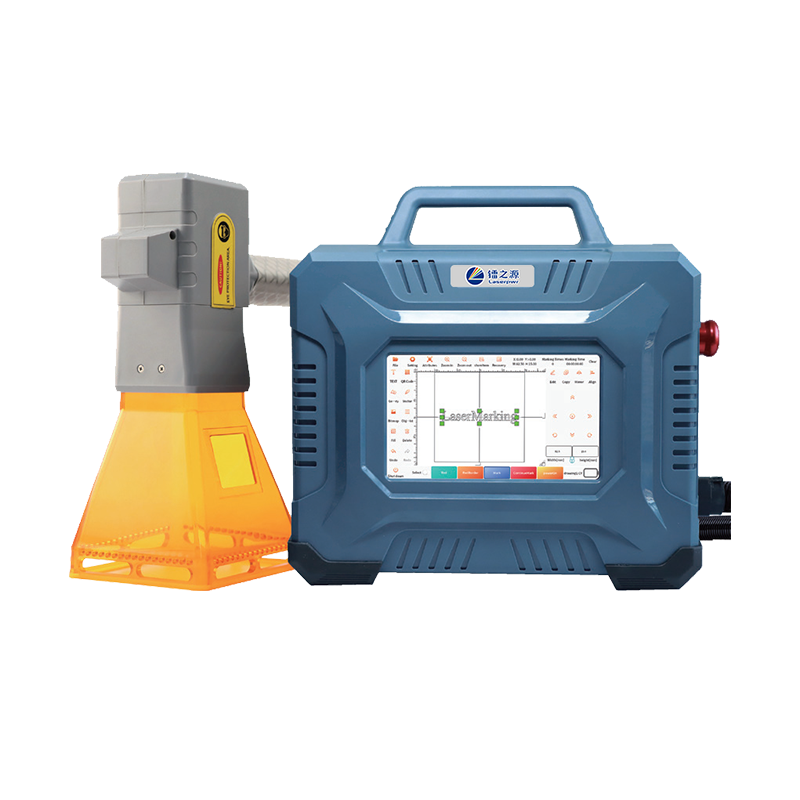
In industrial manufacturing, power construction, and outdoor identification scenarios, the choice of marking equipment directly impacts efficiency and cost. Traditional benchtop laser markers are bulky and difficult to move, while inkjet printing or adhesive labels suffer from poor durability and easy detachment. In recent years, a new generation of portable handheld laser marking machines—featuring battery power, lightweight design, and system integration capabilities—has rapidly emerged as the market's preferred choice.
1. Why Traditional Marking Methods Are Becoming Obsolete
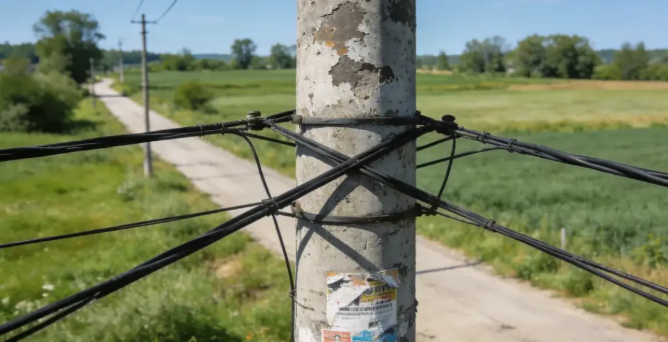
Historically, marking on utility poles, pipelines, and large machinery components relied on three primary methods:
Paint/Inkjet Coding: Simple to apply, but prone to fading, environmentally unfriendly, and typically becomes illegible within months under outdoor exposure.
Adhesive Labels/Nameplates: Require separate label production and manual application, which is inefficient and vulnerable to damage from weather, friction, or tampering.
Benchtop Laser Markers: Offer high precision and exceptional durability, but their heavy, stationary design forces large workpieces to be transported to the equipment—a major logistical bottleneck.
The common pain point across all these methods: the inability to perform permanent, high-quality marking in outdoor or off-grid environments efficiently.
2. What Real-World Problems Does the Portable Handheld Laser Marker Solve?
Taking the latest second-generation portable laser markers as an example, four core breakthroughs address these challenges:
2.1 Truly "Carry-and-Go" Portability
With a total weight ranging from 6 to 12 kg and constructed with rugged engineering-grade plastic housings, a single operator can carry the unit to any job site. For immovable workpieces such as utility poles, bridge steel structures, and mining equipment, the handheld marking head enables direct, on-site operation—eliminating disassembly or transportation.
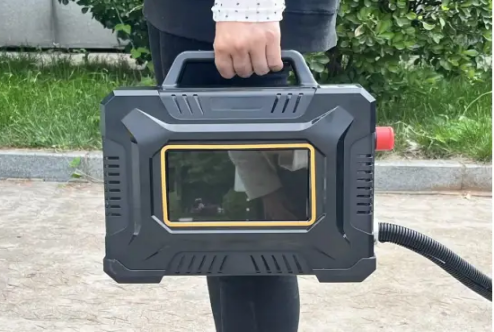
2.2 Swappable Lithium Batteries with Pass-Through Charging
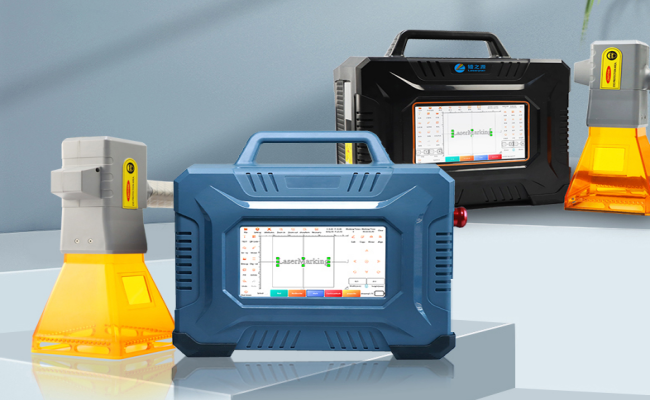
This is the most practical feature for field operations. The standard configuration includes swappable battery packs, each delivering 4–6 hours of continuous marking. Multiple batteries can be kept on-site for rotation. The system also supports plug-in operation and pass-through charging (marking while charging), effectively eliminating range anxiety.
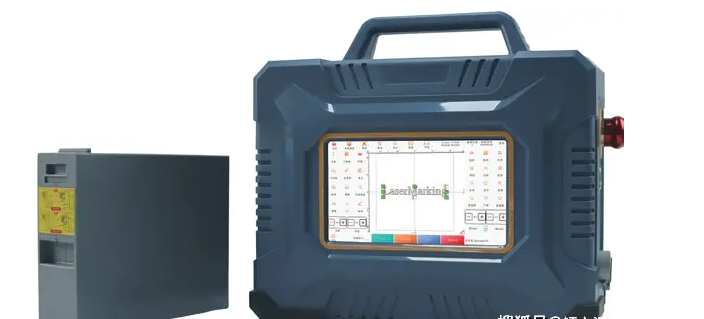
2.3 Precision Comparable to Benchtop Systems
Despite being handheld, these units offer laser power up to 60W (with optional 20W/30W/50W/60W models), utilizing a fiber laser source at 1064nm wavelength with a maximum pulse energy ≥1.4mJ. Field tests confirm that marking depth and clarity on metals, galvanized steel, stainless steel, and plastics fully meet industrial-grade requirements.
2.4 Smart System with MES/ERP Integration
Powered by a proprietary Linux-based operating system with a 7-inch HD touchscreen, the interface is as intuitive as a smartphone. More importantly, it features open APIs for seamless integration with MES, ERP, and PLC systems. Production data can be uploaded in real time, with support for external peripherals including barcode scanners, mouse, keyboard, PC, and even remote control via a mobile APP.
3. Real-World Application Scenarios
Scenario 1: Utility Pole Identification in Power Grid Projects
A provincial power engineering company involved in rural grid upgrades needed to mark "line numbers + installation dates" on thousands of concrete utility poles and galvanized cross-arms. Previously, stenciled paint markings became illegible within three months.
After switching to handheld laser markers, workers operated on-site, completing each pole in approximately 40 seconds with a marking depth of 0.1–0.3mm—estimated to remain legible for over 10 years. The client highly commended the clarity and durability during project acceptance.
Scenario 2: Rework Areas in Automotive Parts Factories
A large automotive parts manufacturer faced inefficiencies in its rework area, where defective parts or batch number changes required frequent re-marking. The benchtop laser marker was located at the opposite end of the production line, consuming significant time in material handling.
By deploying a handheld laser marker directly at the rework station, workers could re-mark or update components on the spot, saving approximately 15 minutes per operation and boosting rework efficiency by around 40%.
Scenario 3: Jewelry and Artisan Customization
Small workshops no longer need to invest in large, expensive equipment. With a fine marking range of 50×50mm, the handheld unit can engrave logos, text, or patterns on curved micro-surfaces such as ring interiors and pendant backs. Multiple studio owners report a return on investment (ROI) within 3 to 6 months.
4. Five Key Factors to Consider When Purchasing
Based on extensive procurement experience, here are five critical considerations for selecting a portable handheld laser marker:
Factor Recommendation
Laser Power For deep engraving on metals or high-speed marking → choose 50W or 60W. For plastics or shallow engraving → 20W or 30W is sufficient.
Battery Performance Verify whether the unit supports swappable batteries and pass-through charging—this is critical for outdoor operations.
System Openness If your facility already uses MES/ERP, confirm that the device offers a secondary development API.
Marking Area The standard 100×100mm range covers most applications. Fine work may prefer 50×50mm; large-format jobs can opt for 150×150mm.
Safety Certification Check for full-protection design on the marking head and CE certification (EU standard)—especially essential for exporters or multinational suppliers.
5. Frequently Asked Questions (From Real Customer Inquiries)
Q: Won't handheld operation cause shaking or misalignment?
A: The device features a red-light positioning system that previews the marking position before operation. With the marking head in contact with or close to the workpiece surface and a stable grip, precision is fully controllable.
Q: How long does a fully charged battery last?
A: For continuous marking at 50W power, one battery lasts approximately 4–5 hours. Lower power settings extend runtime. We recommend keeping two spare batteries on-site for extended outdoor shifts.
Q: Can it mark QR codes? Are they scannable?
A: Yes. The system supports text, QR codes, vector graphics, date codes, bitmaps, and more. Marked QR codes (tested at 1.0×1.0cm) achieve standard readability with mainstream barcode scanners.
Q: Is it complicated to operate? How much training is required?
A: The Linux-based interface is highly intuitive. Users with basic computer skills can master fundamental operations in 10–20 minutes. Complex graphics editing or system integration typically requires a half-day training session.
6. Conclusion: Who Should Invest in This Equipment?
This portable handheld laser marking machine is an ideal investment if you fall into any of the following categories:
Outdoor/off-grid marking needs – utility poles, pipelines, bridges, mining equipment, etc.
Immobile large workpieces – requiring the equipment to come to the workpiece rather than vice versa.
Factory rework areas or high-mix, low-volume production environments.
Small-batch customization workshops – jewelry, handicrafts, signage, and advertising.
Businesses requiring MES/ERP integration for full production traceability.
The future of marking equipment is not about forcing workpieces to adapt to machines—it's about enabling machines to adapt to workpieces. The portable handheld laser marker epitomizes this transformative trend.
Submit this form and we will contact you soon